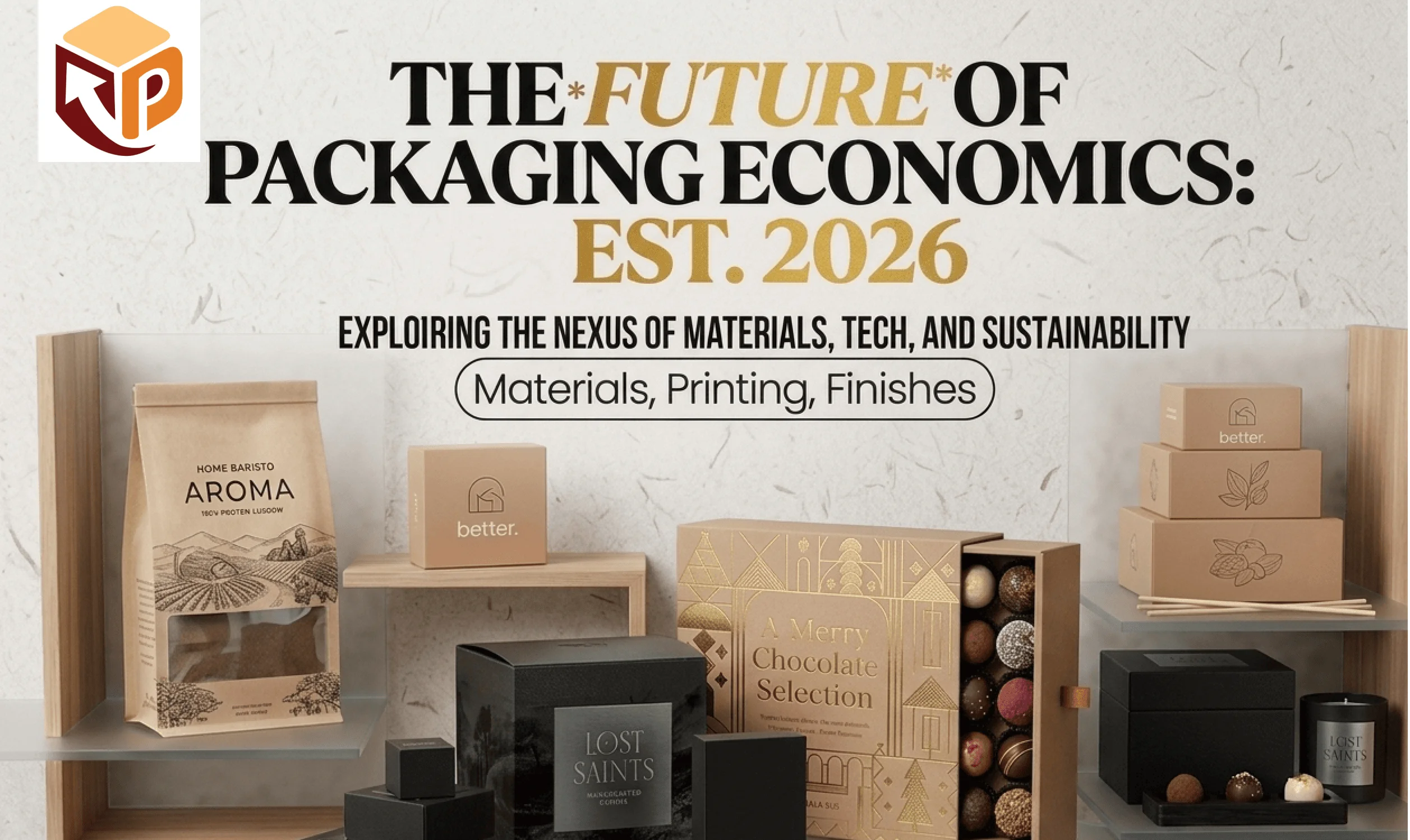
Most brands hit the same wall. Product is ready, launch date is set, and now they need to figure out what the packaging is going to run them. The problem is that custom packaging cost is never a flat number. A kraft mailer for a soap brand and a rigid magnetic box for a jewelry line are two completely different production jobs, different material, different labor, different price.
This guide gives you real numbers. Pricing by box type, what moves the cost up or down, and how to keep your per-unit spend tight without making your packaging look like an afterthought.
How Much Do Custom Boxes Cost by Type?
Here's where pricing lands in 2026 for the most ordered box styles. These assume standard dimensions, CMYK full-color print, and no specialty add-ons:
|
Box Type |
100–500 Units |
1,000+ Units |
|
Corrugated Mailer Box |
$1.20 – $3.00 |
$0.40 – $1.20 |
|
Folding Carton (Tuck End) |
$1.00 – $3.50 |
$0.50 – $1.50 |
|
Rigid Setup Box |
$4.00 – $12.00 |
$3.00 – $8.00 |
|
Kraft Box (Uncoated) |
$0.80 – $2.50 |
$0.35 – $1.00 |
|
Counter Display Box |
$2.00 – $5.00 |
$1.00 – $3.00 |
|
Pillow Box |
$0.60 – $2.00 |
$0.25 – $0.80 |
Some suppliers quote low then tack on plate charges, die fees, and freight that inflate the final number by 20 to 40 percent. Packings.co includes plates, dies, and shipping across the USA in every quote. What you see is what you pay.
What Factors Affect the Cost of Custom Packaging Boxes?
Not every box costs the same to produce. Seven things drive the price.
How Material Type Affects Packaging Cost
The board you pick sets the floor for everything else. Kraft and standard SBS cardboard are the cheapest to source and run through a press. Corrugated adds a fluted middle layer, stronger, a bit pricier, and the default for anything that ships direct to consumer. Rigid chipboard sits at the top. It's thick, it's wrapped, and in a lot of cases it's assembled by hand. That's why a rigid box for a fragrance line runs five to ten times more than a tuck-end for a bar of soap.
How Box Size and Dimensions Impact Cost
More surface area means more board and more ink. A 4x4x2 lip balm carton uses a fraction of the material that a 14x10x6 shipping box does. But it's not just material, oversized boxes also increase your freight cost per unit. Getting the dyeline fitted tight to the product is the cheapest optimization most brands overlook.
How Printing Technique Changes Price
Digital printing handles short runs of 200 to 1,000 units without setup fees. Color comes out clean. Offset litho needs plates, $150 to $400 in setup, but at 3,000+ units the per-piece cost drops below digital, and the color consistency is tighter. Flexo is the workhorse for high-volume corrugated work. One or two colors, fast throughput, low cost. Pick the method that matches your run size. Using offset on 300 boxes or digital on 10,000 wastes money either way.
Cost of Finishing Options and Add-Ons
This is where a box goes from functional to memorable. Every finish adds to the unit cost, but it's where brand perception gets built:
- Gloss or matte lamination: $0.05 – $0.15
- Soft-touch lamination: $0.10 – $0.25
- Foil stamping (gold, silver, holographic): $0.15 – $0.40
- Embossing or debossing: $0.10 – $0.30
- Spot UV: $0.10 – $0.20
- Window patching with PET film: $0.10 – $0.25
A lot of brands stack three or four finishes and wonder why their per-unit cost jumped a dollar. In most cases, one well-placed finish does the work. A foil-stamped logo on a matte kraft box reads premium. You don't need foil plus spot UV plus embossing plus soft touch on the same panel.
How Order Quantity Impacts Custom Boxes Price
This is the factor that surprises first-time buyers the most. Going from 250 units to 1,000 doesn't save you a little, it can cut the per-box price in half. Packaging production has fixed costs. Die cutting, plate making, press calibration, color matching, these cost the same whether you're running 200 boxes or 5,000. At low volume, each box absorbs a big chunk of that overhead. At higher volume, it vanishes.
If you're testing a new product, 100 to 250 units get the job done. Once the product is validated, scaling to 500 or 1,000 is where the custom boxes price really starts working for you.
Structural Design and Complexity Costs
A straight tuck-end carton comes off the die cutter flat, folds in seconds, costs the least. Magnetic closures need a magnet, a catch plate, and hand placement. Custom foam inserts need CNC-cut EVA or molded pulp, produced separately. Collapsible rigid boxes need scored panels, ribbon pulls, and precise folding. Every added feature adds labor and material.
Plenty of brands start with a well-printed tuck-end or mailer box and upgrade the structure later once their order volume justifies the cost jump. That's smart play.
Rush Production and Turnaround Fees
Standard turnaround at most manufacturers runs 7 to 14 business days after proof approval. Need it in 4 to 6? That's a 15 to 30 percent surcharge. During Q4 when every brand is ordering holiday packaging at the same time, rush fees climb even higher.
Get the packaging order in early. If your product launch is in eight weeks, submit the order now while you're still finalizing label copy. Last-minute orders almost always cost more and leave less room to fix mistakes.
How to Reduce Custom Packaging Costs Without Compromising Quality
You don't need the cheapest box. You need to spend money on the right things and cut what doesn't earn its keep.
Size the box to the product. A candle rattling inside an oversized mailer doesn't feel like a premium. It feels like nobody thought it through. Tight packaging protects better, prints cheaper, and ships lighter.
Choose kraft or corrugated for e-commerce. Natural brown kraft with clean one-color printing is trending hard across DTC brands, coffee roasters, soap makers, and subscription boxes. It reads eco-conscious. It costs 30 to 50 percent less than white SBS with full-bleed color.
Pick one killer finish, not four mediocre ones. A spot UV logo on uncoated kraft creates contrast that grabs attention. You don't need to layer every option in the catalog.
Scale your volume. Moving from 250 to 500 units drops the per-box cost by a third in most cases. That's real money.
Avoid suppliers with hidden charges. Plate fees, die setup, proofing charges, shipping surcharges, they add up. At Packings.co, none of these exist. Free plates. Free dies. Free shipping across the USA. The quote is the total.
Custom Packaging vs Stock Boxes: Which Saves More?
Stock boxes from a distributor run $0.15 to $0.50 a piece for plain brown corrugated. No printing. No branding. No custom sizing. If you're shipping auto parts or warehouse stock, that's fine.
But if you're selling skincare, candles, supplements, CBD, gourmet food, or anything where the customer's first physical touchpoint is the box, stock packaging is costing you more than it saves. Custom printed boxes drive repeat purchases, fuel unboxing content on social media, and support premium pricing. A $2 box on a $40 product is a 5 percent investment that can lift your brand perception by 50 percent. The custom boxes price is a line item in production. The return shows up in retention, reviews, and revenue.
What's Included in Every Packings.co Order
Not every supplier's quote covers the same things. Some look cheap until the invoice arrives. Here's what every Packings.co order includes with no exceptions:
- Free shipping anywhere in the USA, no minimum required
- Zero charges for plates, dies, or tooling setup
- Minimum orders starting at 100 units
- 10 finishing options: gloss, matte, soft-touch, foil stamping, embossing, debossing, spot UV, raised UV, window patching, textured finishes
- 18+ box categories: corrugated, rigid, kraft, mailer, display, food-grade, CBD, cosmetic, gift, and more
- 7–14 business-day production with rush options available
- Free design help from the packaging team
No hidden charges. No invoice surprises. The quoted price is the final price.
Get a Custom Packaging Quote for Your Project
You've got the pricing context. Now get numbers specific to your box style, dimensions, material, finish, and quantity.
Request a free quote at packings.co. We respond within 24 hours with itemized pricing and digital proof. No commitments, no follow-up calls unless you want them. Just clear numbers so you can budget the right way.
FAQs
Q: What is the average cost of a custom printed box?
Most custom printed boxes fall between $0.35 and $8.00 per unit. Kraft and corrugated boxes sit at the lower end while rigid setup boxes with premium finishes cost more. The final price depends on material, size, print method, finishing, and order quantity.
Q: Why do small orders cost more per box?
Packaging production involves fixed setup costs like die cutting, plate making, and press calibration. These costs stay the same whether you order 200 boxes or 5,000. At lower volumes each box absorbs a larger share of that overhead, which raises the per unit price.
Q: Are there hidden fees when ordering custom packaging?
Many suppliers charge separately for plates, dies, proofing, and shipping. At Packings.co there are no extra charges for plates, dies, or setup. Shipping across the USA is free on every order. The quoted price is the final price.
Q: How much do finishing options add to the cost?
Each finish adds a small amount per unit. Gloss or matte lamination adds $0.05 to $0.15. Foil stamping runs $0.15 to $0.40. Embossing adds $0.10 to $0.30. Spot UV adds $0.10 to $0.20. Stacking multiple finishes on the same box can add $0.50 to $1.00 per unit on top of the base price.
Q: What is the minimum order quantity for custom boxes?
It varies by supplier. Some require 500 or 1,000 units minimum. At Packings.co the minimum order starts at just 100 units, which makes custom packaging accessible for small businesses and product test runs.
Q: Is custom packaging worth it for small businesses?
Yes. Custom printed boxes reinforce brand identity, improve the unboxing experience, and support premium pricing. Even at low volumes the branding return typically outweighs the cost difference between custom and plain stock boxes.
Q: How long does it take to receive custom packaging?
Standard production runs 7 to 14 business days after proof approval. Rush orders can be completed in 4 to 6 business days with an additional surcharge of 15 to 30 percent depending on the supplier.