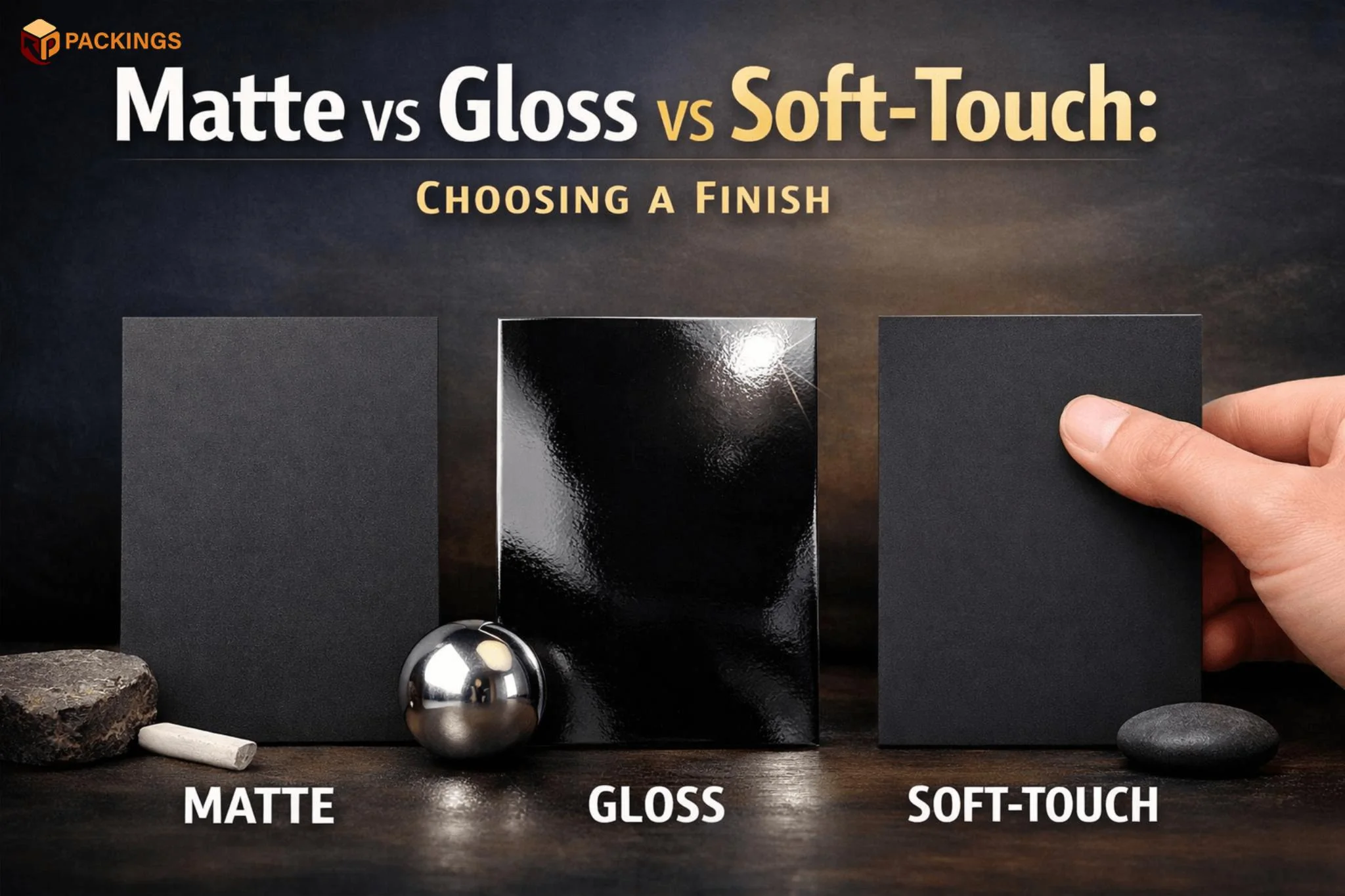
The finish on a custom box is the last production decision and often the one that shapes first impressions the most. Two boxes with identical structures, identical printing, and identical materials can feel completely different in the hand depending on whether the surface is glossy, matte, or velvety. That tactile split-second reaction influences whether a buyer perceives a product as premium, budget, playful, or refined.
According to the Smithers Pira packaging research group, tactile and visual finishing options are among the fastest-growing value-add categories in the global packaging industry, driven by brands seeking differentiation in crowded retail and DTC channels. Choosing the right lamination for your custom packaging boxes comes down to three questions: how does the product need to feel, where will buyers encounter it, and what does the brand need to communicate?
How Gloss Lamination Works on Packaging
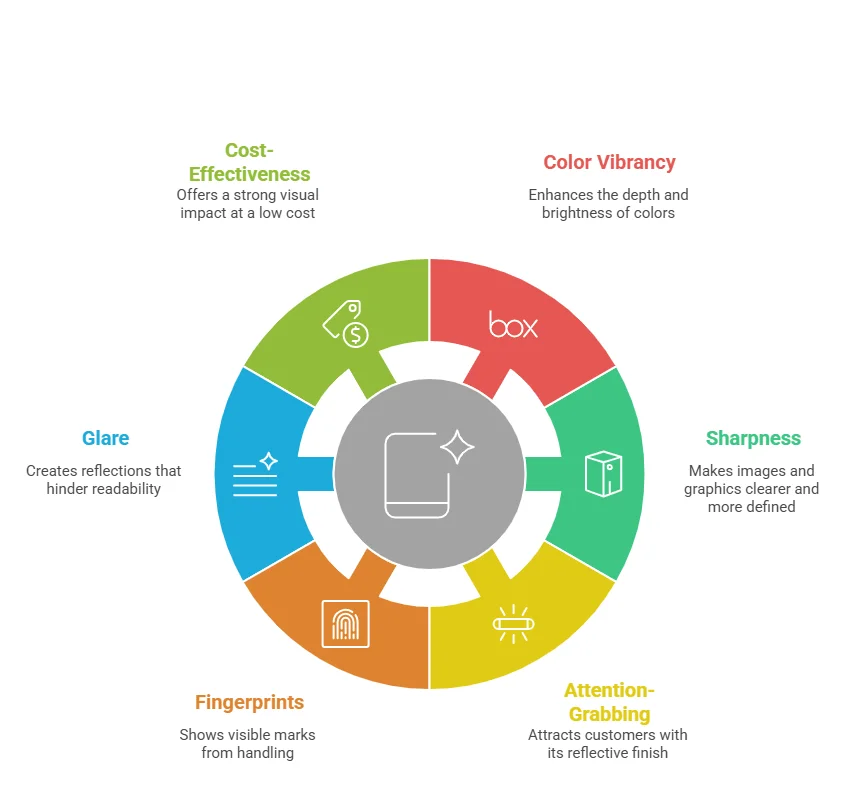
What is gloss lamination?
It is a thin, transparent plastic film applied to the box surface that creates a shiny, reflective finish. Gloss amplifies color vibrancy, making reds deeper, blues brighter, and photographs sharper. If the design relies on bold graphics, full-bleed imagery, or high-contrast color blocking, gloss makes every element pop.
Gloss is the most common finish on food packaging, children's products, and any brand targeting a youthful or energetic identity. It catches overhead retail lighting and pulls attention from several feet away, which matters when the box is competing for shelf space.
Where Gloss Falls Short:
Gloss shows fingerprints. Every touch leaves a visible mark, especially on dark-colored boxes. In high-traffic retail environments where customers pick up and put back products, a glossy black box can look handled and worn within hours. Gloss also creates glare under direct lighting, which can make text harder to read at certain angles and photographs harder to appreciate.
Per-unit cost for gloss lamination is typically the lowest of the three options, running $0.03 to $0.10 per box depending on size and volume. For brands prioritizing visual impact over tactile experience, gloss delivers the strongest return per dollar.
How Matte Lamination Changes the Feel
What is matte lamination?
It is a non-reflective film that gives the box a smooth, satin-like surface. Matte absorbs light instead of reflecting it, which eliminates glare entirely and creates a calm, modern aesthetic. Colors appear softer and more muted compared to gloss, which works well for minimalist designs, earth-toned palettes, and brands positioning themselves as refined or understated.
Matte is the standard finish for cosmetics packaging, wellness brands, premium soap boxes, and any product where elegance matters more than vibrancy. It hides minor surface imperfections better than gloss, and it is easier to write on with markers or pens, which can matter for gift packaging and personalization.
Durability Considerations:
Matte resists fingerprints better than gloss but is slightly more prone to visible scratches and scuff marks. Light surface scratches that would be invisible on gloss can show as faint white lines on a matte surface, especially on dark boxes. For products that undergo heavy handling during shipping or retail stocking, a matte box may show wear faster than a gloss one.
Matte lamination costs roughly $0.05 to $0.15 per unit, slightly more than gloss but still one of the most cost-effective finishing options in custom packaging.
Why Soft-Touch Lamination Commands a Premium
What is soft-touch lamination?
Also called velvet lamination, it is a specialty film that creates a smooth, suede-like texture on the box surface. The moment a buyer picks up a soft-touch box, the tactile difference is immediate and unmistakable. It feels expensive. That single sensation does more to communicate premium positioning than almost any other finishing technique.
Soft-touch is the top choice for luxury rigid boxes, high-end candle packaging, jewelry boxes, and limited-edition product runs. It photographs exceptionally well for e-commerce product listings and social media, producing a clean, shadow-free surface that looks polished in every lighting condition.
Cost and Practical Tradeoffs:
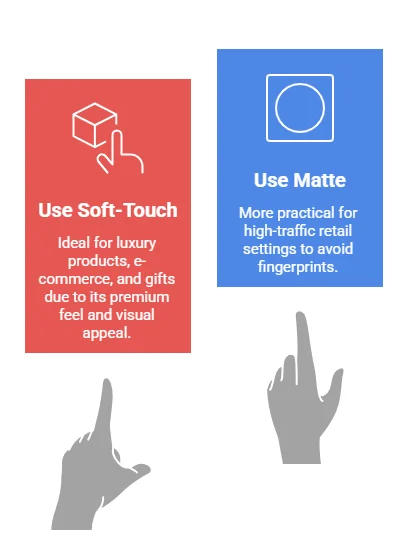
Soft-touch is the most expensive lamination option, typically running $0.10 to $0.25 per unit. It can also accumulate visible fingerprints in high-traffic retail settings where dozens of customers handle the box daily. For products displayed behind glass, shipped directly to consumers, or presented as gifts, soft-touch performs beautifully. For open-shelf retail with heavy foot traffic, matte may be the more practical choice.
Combining Finishes for Maximum Impact
The most effective packaging designs in 2026 layer finishes rather than relying on a single one. These combinations create contrast that the eye and the hand both notice.
Matte base with spot UV:
highlights specific elements like a logo, tagline, or pattern with a high-gloss raised coating. The contrast between the flat matte surface and the reflective UV area creates visual depth that flat printing alone cannot achieve.
Soft-touch base with foil stamping:
pairs the velvety texture with a metallic logo accent. Gold foil on a soft-touch black box is one of the most popular premium packaging combinations across cosmetics, candles, and jewelry.
Matte base with embossing:
adds a three-dimensional element. The logo or pattern is physically pressed into the surface, creating a raised or recessed detail that buyers feel before they see. This works particularly well on kraft and rigid substrates.
Quick Decision Guide by Product Type
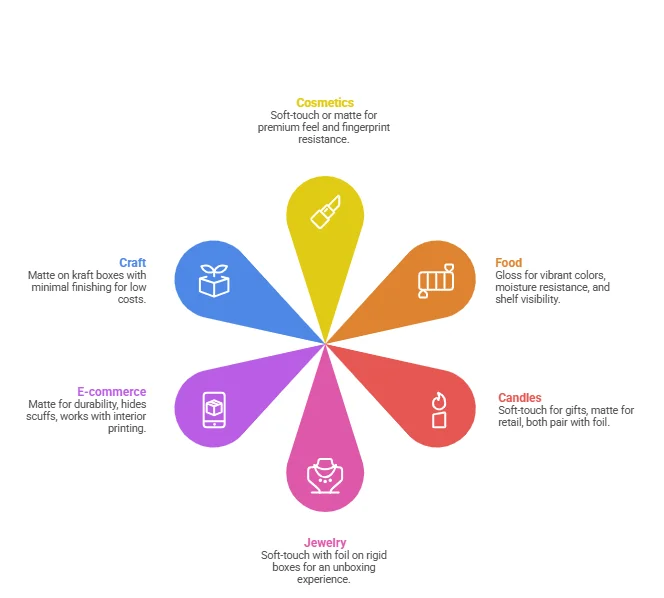
Cosmetics and skincare:
soft-touch or matte. Premium feel, fingerprint resistance, photographs well for online listings.
Food and confectionery:
gloss. Vibrant color reproduction, moisture resistance, and strong shelf visibility.
Candles and home fragrance:
soft-touch for gift and DTC lines, matte for retail shelf display. Both pair well with foil accents.
Jewelry and luxury gifts:
soft-touch with foil stamping or embossing on rigid gift boxes. The unboxing experience justifies the higher per-unit cost.
Subscription and e-commerce:
matte. Durable, hides shipping scuffs, works with interior printing for branded unboxing moments.
Craft and artisan products:
matte on kraft boxes with minimal finishing. Keeps costs low while maintaining a clean, professional appearance.
Order a Free Finish Sample Before You Commit
Photos cannot replicate how a finish feels in the hand. Before locking in a lamination for a full production run, request physical samples so you can compare gloss, matte, and soft-touch side by side on the actual material and color you plan to use.
We provide free finish samples on any box style so you can see and feel the difference before ordering. No plate fees, no die charges, free shipping across the USA. MOQ starts at 100 units.
Get your free sample and quote today.
What Buyers Ask About Packaging Finishes
Q: What type of lamination is ideal for high-end packaging?
Soft-touch laminate offers a velvety feel that conveys a quality product and can be paired nicely with foil stamping and embossing to create an exceptional experience when opening the package.
Q: Will using a matte laminated box cause the colors of my package to appear muted?
Yes, but to a minimal extent. Using a matte laminate will diminish some of the vibrancy of your design (relative to using a glossy laminate). Therefore, if your design incorporates bolder, more saturated color schemes, you should use a glossy laminate in order to reproduce them as accurately as possible. Conversely, if your design is more minimalist and made up of mostly earth-toned colors, then a matte laminate will work much better.
Q: Am I able to use both matte and gloss finishes on one box?
Yes! Spot UV is a way to apply a glossy finish onto certain portions of the box where a matte finish has been applied previously. This will create a contrast in texture (between the two finishes) which will allow logos, text, and design elements to stand out without adding any reflective surfaces to the overall surface of the box.
Q: Does soft-touch show fingerprints?
In factory and shipping conditions, no. On open retail shelves with heavy customer handling, fingerprints can accumulate over time. For high-traffic retail, matte is the more practical choice.
Q: What is the cheapest packaging finish?
Gloss lamination is the most affordable, typically $0.03 to $0.10 per unit. Matte runs $0.05 to $0.15. Soft-touch is $0.10 to $0.25. All three prices decrease with higher order volumes.
Q: Which finish is best for e-commerce product photos?
Soft-touch and matte both photograph well because they eliminate glare. Gloss can create reflections and hot spots under studio lighting that make product photography more difficult.