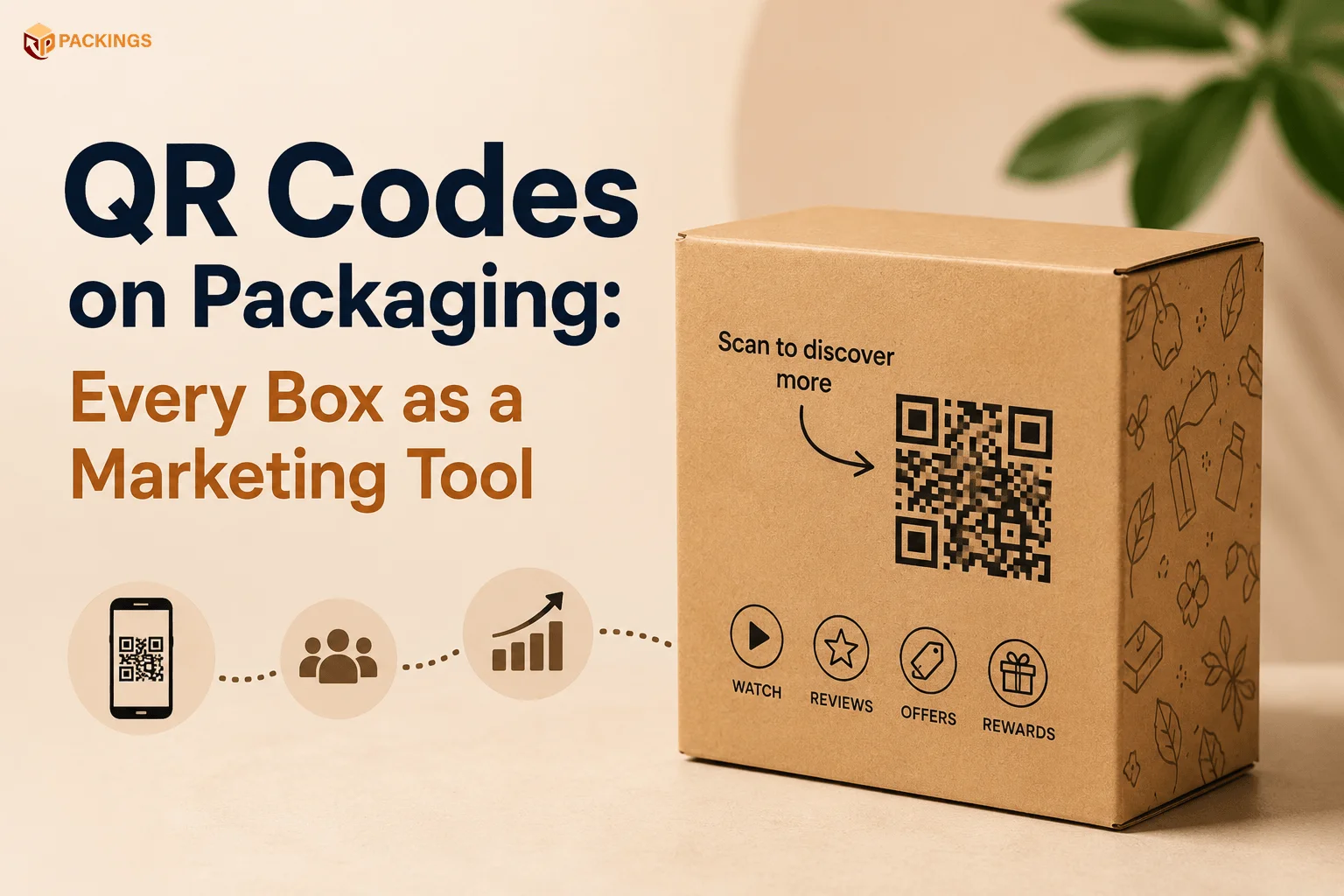
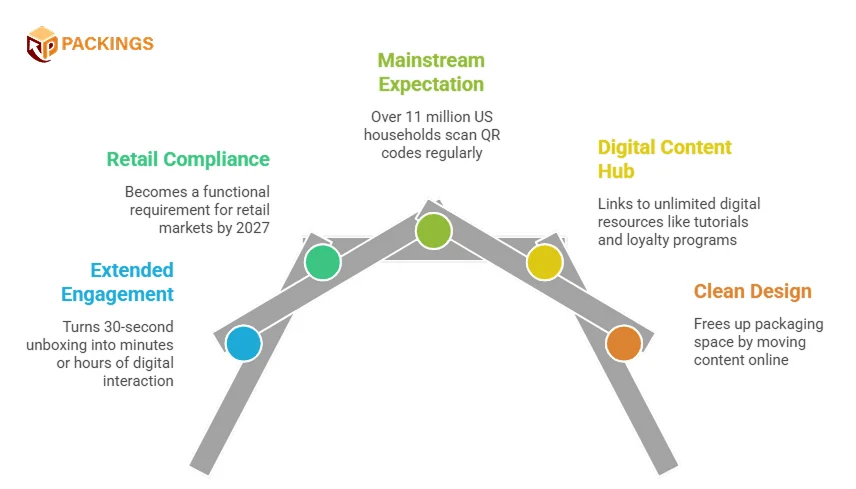
A custom box gets maybe 30 seconds of attention during unboxing. The product comes out, the box gets set aside, and the brand's physical moment with the customer is over. Unless the box does something. A QR code printed on a panel, a flap, or the interior lid extends that 30-second window into minutes or hours of digital engagement that no amount of printed text can match.
According to the GS1 organization, the global transition from traditional 1D barcodes to 2D codes (including QR) is accelerating under the GS1 Sunrise 2027 initiative. Within two years, QR codes on packaging will not be a marketing bonus. They will be a functional requirement for retail compliance in multiple markets. Brands that integrate them now build the infrastructure early. Brands that wait will scramble to retrofit every SKU under deadline pressure.
Over 11 million US households scan QR codes regularly. 43% of consumers have scanned a code on product packaging specifically. That is not a niche behavior anymore. It is a mainstream expectation, and custom packaging boxes are the ideal surface to deliver it.
How QR Codes Turn Packaging into a Channel
What is a QR code on packaging?
It is a scannable two-dimensional barcode printed directly on a box that connects the physical product to a digital destination, turning static packaging into an interactive touchpoint that extends the customer relationship beyond the unboxing moment.
Traditional packaging communicates through ink on cardboard. There is a finite amount of space, and every square inch competes between branding, regulatory text, ingredients, and marketing copy. A QR code solves the real estate problem entirely. A single 2cm square on a kraft box or a corrugated mailer can link to a landing page with product tutorials, brand story videos, loyalty program enrollment, reorder pages, sustainability reports, or customer feedback forms. The box surface stays clean. The digital content behind the code is unlimited.
Static vs Dynamic QR Codes on Packaging
This distinction matters more than most brands realize, and getting it wrong means reprinting boxes.
Static QR Codes:
A static QR code has a fixed URL baked directly into the code pattern. Once printed, the destination cannot be changed. If the landing page moves, the URL breaks, or the campaign ends, every box with that code becomes a dead link. Static codes work for permanent destinations like a homepage or a product page that will never change URLs. They cost nothing to generate and require no subscription.
Dynamic QR Codes:
A dynamic QR code routes through a redirect service. The printed code stays the same, but the destination URL can be updated at any time without reprinting. Run a holiday campaign in Q4, switch it to a spring promotion in Q1, then redirect it to a loyalty program in Q3. Same printed box, three different customer experiences across the year.
Dynamic codes also provide scan analytics: how many scans, where, when, and on which device. That first-party data is increasingly valuable as third-party cookies disappear and brands need direct insight into customer behavior.
For packaging that ships over multiple months or seasons, dynamic codes are the only choice that makes financial sense. The redirect service typically costs $5 to $20 per month for small brands. Reprinting 2,000 boxes because a URL changed costs $1,500 to $4,000.
What to Link a Packaging QR Code To
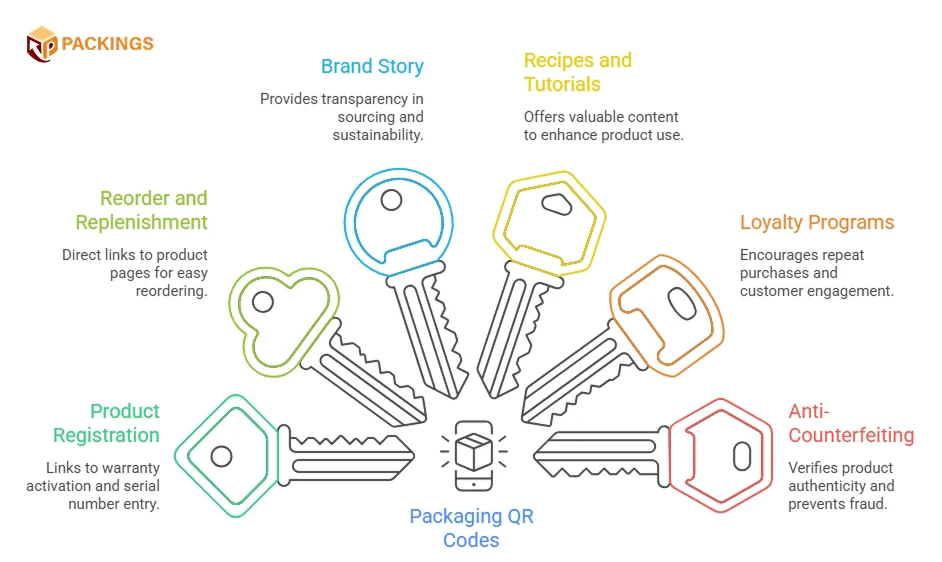
A QR code without a clear destination is wasted ink. The scan needs to deliver something the customer actually wants in that moment. Here is what works across different product categories.
Product registration and warranty:
Electronics, appliances, and premium goods. The customer scans, enters a serial number, and activates their warranty in 30 seconds. No paper cards, no mailing anything.
Reorder and replenishment:
Consumables like food packaging, supplements, coffee, and skincare. The code links directly to the product page with a one-click reorder option. The box becomes a conversion tool that sits in the customer's kitchen or bathroom.
Brand story and sourcing transparency:
CBD boxes, organic products, and sustainability-focused brands. Link to the Certificate of Analysis, farm-to-shelf sourcing data, or a sustainability impact page. This builds trust in a way that printed text alone cannot.
Recipes, tutorials, and how-to content:
Food brands, bakery packaging, candle care guides. The code links to a mobile-optimized content hub that adds value to the product without crowding the box with instructions.
Loyalty program enrollment:
Subscription brands and repeat-purchase products. The scan drops the customer into a loyalty flow where they earn points, get exclusive offers, or unlock a referral code.
Anti-counterfeiting and authentication:
Luxury goods, cosmetic brands, and pharmaceuticals. Serialized QR codes, where every box carries a unique code that verifies product authenticity when scanned. The 2026 Global Connected Packaging Survey found that 73% of brands now rate serialized QR codes as a high priority for fraud prevention.
Where to Place the QR Code on the Box
Placement determines scan rates. A code buried on the bottom flap gets scanned roughly never. Placement strategy should match the moment you want to capture the customer's attention.
The exterior side panel:
Is the highest-visibility placement for retail products. The customer sees the code while browsing in-store or when the box arrives. Best for product information, authentication, and brand story access.
Interior lid flap:
Is the prime placement for unboxing engagement. The customer opens the box and immediately sees the code with a call to action. Best for loyalty enrollment, reorder links, and exclusive content. This is where we see the highest scan rates across rigid gift boxes and subscription mailers.
Back panel or bottom:
Works for regulatory-heavy products where the QR code links to compliance documentation, full ingredient lists, or multilingual instructions that do not fit on the physical label.
For print quality, the code needs a minimum size of 2cm x 2cm with a clear, quiet zone (white space border) of at least 4mm on all sides. High contrast between the code and the background is critical. Black code on white or light kraft prints cleanly. Dark code on a dark background fails. Always test a printed sample before running full production.
What QR Codes Cost on Custom Packaging
This is the part that surprises every brand we work with: adding a QR code to a custom box costs essentially nothing in production.
The code itself is free to generate through any QR code platform. Printing the code onto the box uses the same CMYK process that prints the rest of the design. There is no additional plate, no specialty ink, and no separate production step. The QR code is simply part of the artwork file, placed on the dieline like any other design element.
The only cost is the dynamic redirect service if you choose dynamic over static, which runs $5 to $20 per month for most small to mid-size brands. Compared to the cost of a box reprint ($1,500+) or the value of even 50 additional reorders per month driven by a scan-to-buy link, the ROI is immediate.
Getting Ahead of GS1 Sunrise 2027
The GS1 Sunrise initiative will require retailers to accept 2D barcodes (including QR codes) at the point of sale by 2027. This means product packaging will increasingly carry QR codes as a functional requirement, not just a marketing add-on. Major retailers, including Walmart and Kroger, are already piloting 2D barcode acceptance in checkout systems.
For brands that sell through retail channels, building QR code infrastructure into packaging now avoids the rush of retrofitting every SKU when the mandate takes full effect. For DTC brands, the opportunity is even clearer: the code is already there for marketing. When retail requirements catch up, the packaging is already compliant.
Start Printing Smarter Boxes Today
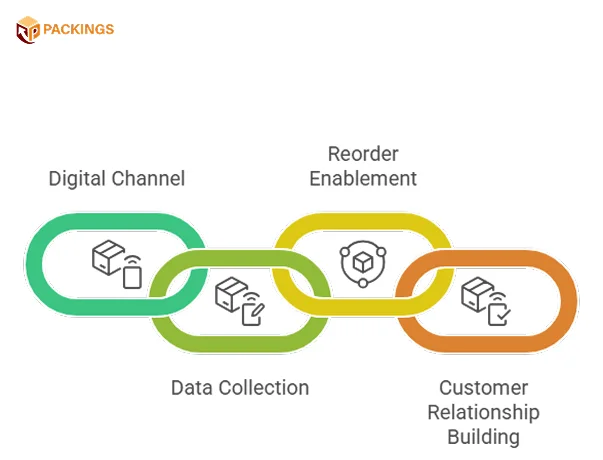
Every box your brand ships is a marketing surface that either works for you or sits idle. A QR code turns that surface into a digital channel that drives engagement, collects data, enables reorders, and builds the kind of customer relationship that printed text alone cannot create.
We print QR codes on all box styles at no additional production cost. Free design support to integrate the code into your artwork, no plate fees, no die charges, free shipping USA-wide. MOQ starts at 100 units. Get your smart packaging quote today.
QR Codes on Custom Packaging: What Brands Ask
Does adding a QR code cost extra on a custom box?
No. The QR code prints as part of the standard CMYK artwork. There is no additional plate, ink, or production step. The code is placed on the dieline like any other design element.
What is the difference between static and dynamic QR codes?
Static codes have a fixed URL that cannot be changed after printing. Dynamic codes use a redirect service that lets you update the destination at any time without reprinting boxes. Dynamic is recommended for any packaging that ships over multiple months.
What should the QR code link to?
Match the destination to the product and moment. Reorder pages for consumables, loyalty enrollment for subscription brands, COA results for CBD, brand story pages for premium products, and tutorials or recipes for food packaging.
What size does the QR code need to be on the box?
Minimum 2cm x 2cm with at least 4mm of quiet zone (white space) on all sides. High contrast between the code and background is essential for reliable scanning. Always test a printed sample first.
What is GS1 Sunrise 2027, and how does it affect packaging?
GS1 Sunrise requires retailers to accept 2D barcodes, including QR codes, at checkout by 2027. This makes QR codes on packaging a compliance requirement for retail brands, not just a marketing feature. Building QR infrastructure now avoids last-minute SKU retrofitting.
Can QR codes be used for anti-counterfeiting?
Yes. Serialized QR codes assign a unique code to every individual box. When scanned, the code verifies product authenticity. 73% of brands now rate serialized QR codes as a high priority for fraud prevention, according to the 2026 Connected Packaging Survey.