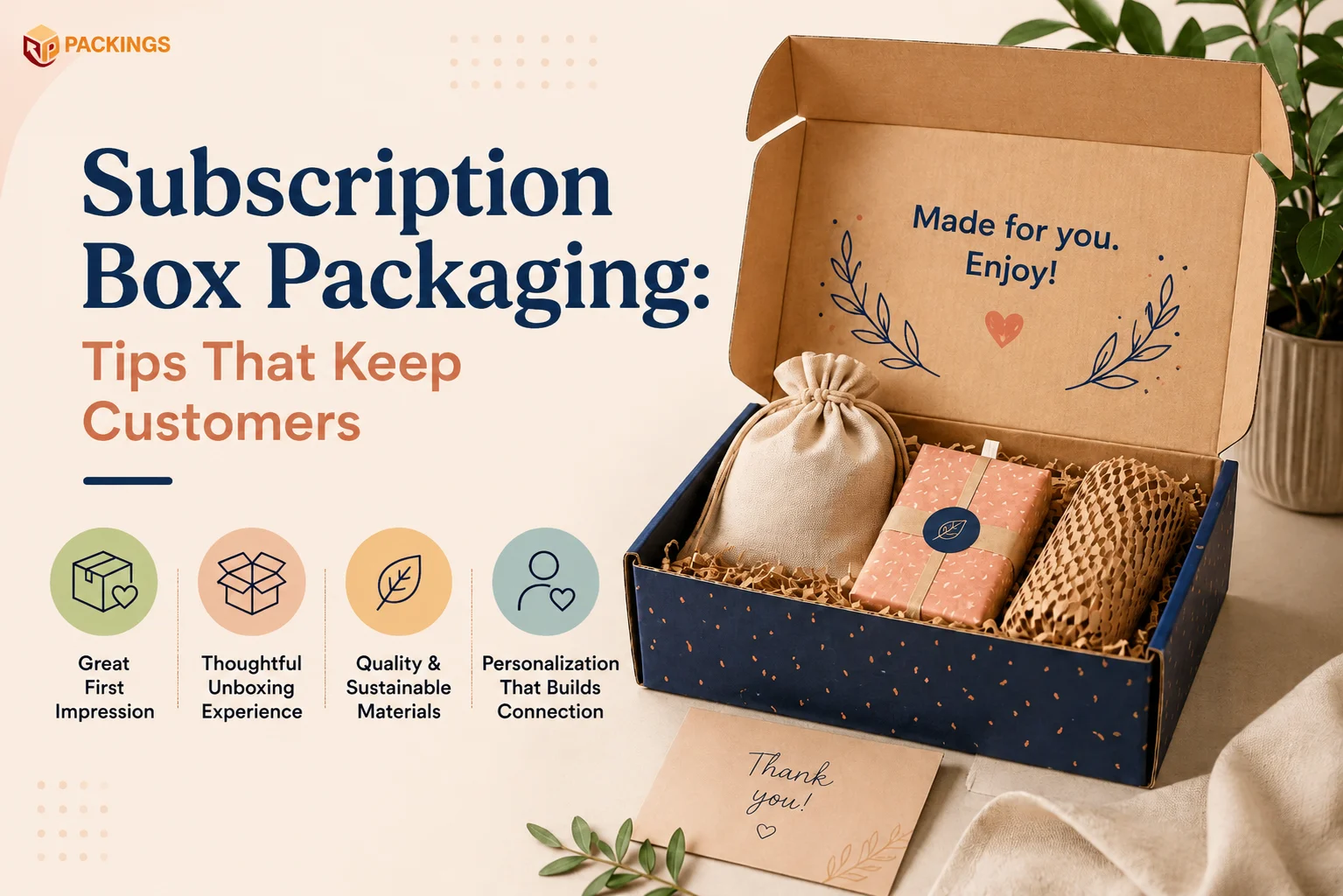
The average subscriber sticks around for about 125 days. Four months. That means most subscription brands get exactly four unboxing moments to prove the monthly fee is worth it before the cancellation link starts looking attractive. The product inside matters, obviously. But the box it arrives in shapes the emotional reaction that determines whether month five ever happens.
Research from the Subscription Trade Association (SUBTA) confirms that packaging quality ranks among the top three factors influencing subscriber retention, right alongside product curation and perceived value. Brands that invest in better packaging report renewal rates up to 23% higher than those shipping in generic brown boxes. That is not a branding statistic. That is revenue.
Subscription box packaging is custom-designed packaging built for recurring product deliveries. It prioritizes durability, branded presentation, and unboxing experience to reduce churn, improve retention, and increase subscriber lifetime value. Compared to standard shipping boxes, subscription packaging focuses more on repeat customer engagement and visual presentation than on protection alone.
Here is what we see working across subscription brands ordering custom mailer boxes from wholesale subscription box suppliers every month: the ones that treat the box as part of the product keep subscribers longer. The ones that treat it as a shipping container watch churn climb.
Why the Box Is a Retention Tool
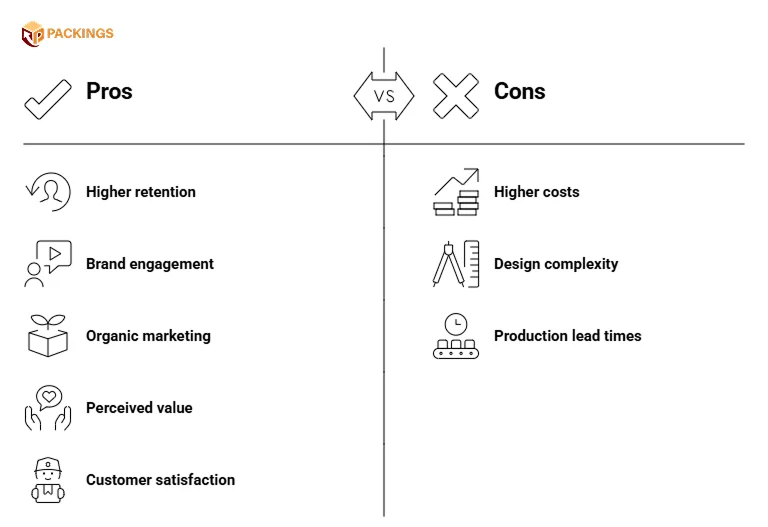
A subscription box gets opened at the kitchen table, on the couch, sometimes on camera. It is not a warehouse-to-shelf transaction. It is a personal moment, and the packaging sets the tone for that moment every single month. When the box feels thoughtful, the subscriber feels valued. When it feels like an afterthought, so does the subscription.
About 76% of consumers notice custom packaging versus a standard brown box. One in three subscribers has shared an unboxing photo on social media. That organic reach is free marketing, but it only happens when the box is worth photographing.
If you are planning your next subscription box run, getting the packaging right before the first shipment prevents unnecessary costs and protects retention from month one.
Choosing the Right Box Format
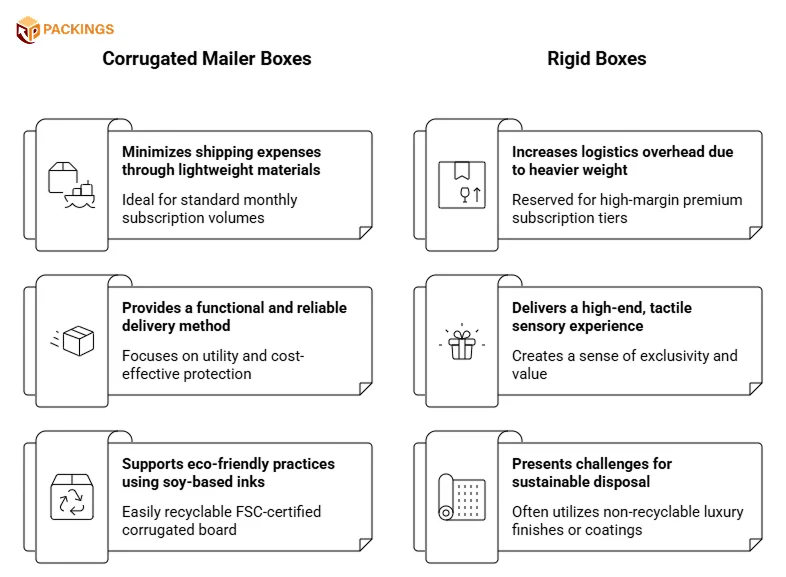
Corrugated Mailer Boxes for Most Subscriptions
The corrugated mailer is the workhorse of the subscription industry. E-flute corrugated provides a smooth print surface on the outside while the fluted interior absorbs shipping impact. Self-locking tuck tops eliminate the need for tape, which speeds up fulfillment and gives the subscriber a cleaner opening experience.
For brands shipping products under 3 pounds, E-flute mailers in the 10x8x3 to 14x10x5 range cover roughly 80% of subscription box use cases. Custom corrugated boxes in these sizes print beautifully in full CMYK with interior and exterior branding. Per-unit cost runs $0.80 to $2.50 depending on size, print coverage, and finishing.
Rigid Boxes for Premium Subscription Tiers
Premium subscription lines, think luxury beauty, artisan goods, or high-end wellness, benefit from rigid two-piece boxes. The weight and structure of a rigid gift box communicates a quality level that corrugated cannot match. The tradeoff is cost: rigid boxes run 3 to 5 times more per unit. Reserve them for welcome boxes, anniversary shipments, or premium tier subscribers where the perceived value justifies the investment.
Interior Branding That Drives the Unboxing
The outside of the box gets the subscriber's attention at the door. The inside is where the emotional experience happens. Interior printing is the single highest-impact, lowest-cost upgrade a subscription brand can make.
A branded message on the inner lid flap, a color-matched interior, or a simple "Welcome back" with the subscriber's month number turns a cardboard container into a branded moment. The cost of adding interior printing to a corrugated mailer runs $0.08 to $0.20 per unit depending on coverage area. For a box that gets opened on camera and shared online, that is an absurdly good return.
Tissue paper layered over the products creates a reveal sequence. The subscriber lifts the lid, sees branded tissue, then parts it to discover the products underneath. That three-second delay builds anticipation and drives stronger social sharing.
Custom Inserts That Protect and Present
Subscription boxes ship monthly, which means the packaging takes transit abuse twelve times a year. Products that arrive damaged or loose inside the box create the kind of experience that leads directly to cancellations.
Custom cardboard inserts with die-
cut compartments hold each product in place, prevent movement during shipping, and create a curated presentation when the box opens. For glass bottles, jars, or fragile items, foam or molded pulp inserts add protection that cardboard dividers alone cannot match.
The insert also controls the visual layout. Instead of products jumbled together, each item sits in its own space, visible and intentional. That organized presentation reinforces the "curated" promise that most subscription brands sell on.
Seasonal and Rotating Designs
Sending the same box design twelve months in a row kills the novelty that keeps subscriptions exciting. Quarterly or seasonal design refreshes give subscribers something new to look forward to without requiring a complete structural change.
A spring color palette in Q1, a bold summer design in Q2, a warm autumn theme in Q3, and a holiday edition in Q4. The box structure, material, and size stay identical. Only the exterior artwork changes. This keeps print setup costs manageable while giving subscribers visual variety that rhttps://packings.co/hexagon-boxeseinforces the feeling of receiving something fresh each cycle.
For brands with tighter budgets, even a simple color shift on the interior tissue or a seasonal insert card creates enough variation to maintain novelty.
Right-Sizing Saves Money and Builds Trust
Oversized boxes filled with void material frustrate subscribers and inflate shipping costs. DIM weight pricing means carriers charge based on box dimensions, not just product weight. A box that is two inches too tall in every direction can add $0.50 to $1.50 per shipment in unnecessary DIM charges across a full subscriber base.
Right-sizing the box to fit the product tightly reduces material waste, cuts DIM costs, and communicates that the brand is intentional about sustainability. Subscribers notice when a box is 60% air and packing peanuts. They also notice when everything fits perfectly.
Common Subscription Box Packaging Mistakes
These are the errors we see most often, and every one of them costs either money or subscribers or both.
Overbranding the exterior, ignoring the interior
A beautiful outside with a plain brown inside wastes the most important moment: the opening. Interior printing costs pennies per unit but drives the emotional response that determines renewal.
Wrong box size for the product:
Oversized boxes increase DIM shipping costs by $0.50 to $1.50 per unit and create an unboxing experience that feels careless. Right-size every SKU.
No insert, no protection:
Products that arrive loose and jumbled communicate the opposite of "curated." Products that arrive broken trigger cancellations and returns that cost 5 to 10 times more than the insert would have.
Zero seasonal variation:
The same box every month for a year makes month eight feel identical to month two. Quarterly artwork rotations maintain novelty without structural changes.
Ignoring sustainability:
Monthly deliveries multiply the environmental footprint twelve times a year. Subscribers track that. Kraft mailer boxes with soy-based inks and FSC-certified corrugated board address this at minimal additional cost.
Sustainability Is Now a Subscriber Expectation
Ninety percent of consumers are more likely to buy from brands using eco-friendly packaging, and 39% have already switched brands specifically over packaging sustainability. For subscription businesses where the same buyer receives a new box every month, the environmental impact compounds and so does the scrutiny.
Kraft mailers printed with soy-based inks and finished with water-based coatings are fully curbside recyclable. FSC-certified corrugated board adds third-party verification. Printing a small "100% recyclable" note on the box bottom costs nothing and gives subscribers permission to feel good about staying subscribed.
Build a Box That Earns Month Five
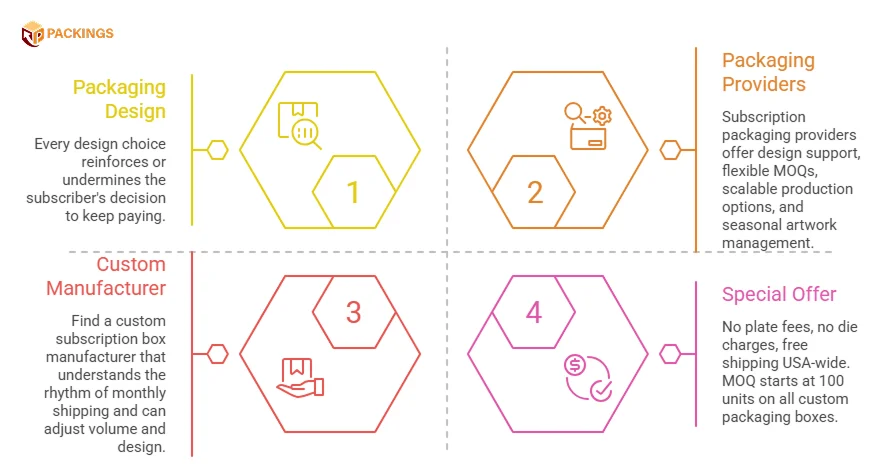
The brands that retain subscribers past the four-month danger zone are the ones where the packaging feels like part of the product, not a container for it. Every design choice, from the exterior print to the insert layout to the tissue paper color, either reinforces or undermines the subscriber's decision to keep paying.
Subscription packaging providers that specialize in recurring box programs typically offer design support, flexible MOQs, scalable production options, and seasonal artwork management for growing brands. The key is finding a custom subscription box manufacturer that understands the rhythm of monthly shipping and can adjust volume and design without locking into rigid contracts.
No plate fees, no die charges, free shipping USA-wide. MOQ starts at 100 units on all custom packaging boxes. Get your subscription box quote today.
Subscription Box Packaging: What Monthly Brands Ask
What material works best for monthly subscription boxes?
E-flute corrugated for most subscriptions. It prints cleanly, protects products in transit, and costs $0.80 to $2.50 per unit depending on size and print coverage. Rigid boxes work for premium welcome kits and luxury tiers.
How much does interior printing add to the cost?
Between $0.08 and $0.20 per unit for single-color or full-color interior lid printing on corrugated mailers. It is the highest-impact, lowest-cost upgrade for unboxing experience and social sharing.
Should I change the box design every month?
Not every month. Quarterly or seasonal rotations keep the experience fresh without inflating setup costs. Change the artwork, not the structure, to keep production efficient and costs predictable.
What is DIM weight and why does box size matter?
DIM (dimensional) weight pricing means carriers charge based on box dimensions, not just actual weight. An oversized box adds $0.50 to $1.50 per shipment in unnecessary charges. Right-size the box to the product.
Do subscribers care about sustainable packaging?
Strongly. Ninety percent of consumers prefer brands with eco-friendly packaging, and 39% have switched brands specifically over packaging sustainability. For monthly deliveries, the impact multiplies twelve times per year.